International Chapter
Tiasa Adhya


Jaime Antonio Almeida
Juan Pablo Alvarez
Touré Fréjuce Amoule
Deyzon Anúdelo Vergara
Dingha Babila
Dingha is a PhD student at the University of Bamenda, Cameroon. His main interest lies in the sustainable exploitation and consumption of natural resources especially wetlands. He is passionate about community engagement, and awareness raising for wise use of wetlands and environmental sustainability.
Leonardo Felipe Bairos Moreira
Myriam Susana Barrera Lobaton
Antonia Belcher
Pamela Bernabeu


Mahieddine Boumendjel
Daniela Cardona Álzate
EDUARDO CEJUDO
Currently working at the Water Sciences Unit (UCIA) in Cancun, Mexico (Yucatán Scientific Research Center (http://www.cicy.mx/unidad-de-ciencias-del-agua/introduccion). Personal website https://eduardocejudo.weebly.com/
Lorena Chavarro Chaux
Ruben Dario David
Gillian Davies
Gillian Davies is a Senior Ecologist & Natural Climate Solutions Specialist at BSC Group, Inc., where her work focuses on climate change and wetlands, working with local communities to develop Nature-based Solutions, particularly wetland, forest, and soil conservation and restoration, and providing wetland peer reviews for Conservation Commissions. She is a Visiting Scholar at Tufts University Global Development and Environment Institute, is Immediate Past President of the Society of Wetland Scientists Professional Certification Program, was the 2016-2017 SWS President, is a co-lead for the SWS Climate Change and Wetlands Initiative and chairs the SWS Rights of Wetlands Section and the WOTUS ad hoc sub-committee. She serves on the International Association for Ecology (INTECOL) Wetlands Working Group. Gillian served on the Massachusetts Healthy Soils Action Plan working group. Gillian has a Master of Environmental Studies degree with a concentration in ecosystem ecology from the Yale School of the Environment, and a bachelor’s degree from Williams College. She is a certified Professional Wetland Scientist, a Registered Soil Scientist, and has received the SWS President’s Service and SWS 40th Anniversary Awards. In her spare time, she and her husband enjoy hiking, mountain biking and skiing.
Maria De los Angeles Castaño López

María Denaro
Jose Andres Deosa Velilla

Andrew Der
With a total of 33 years of experience (20 as a manager) working within the Chesapeake Bay watershed, Mr. Der is currently executive principal of Andrew T. Der and Associates, LLC practicing in the water resources consulting and contracting industry regionally and nationally since 2013. Before that and since 2000, he was Director of Environmental Services for two civil engineering firms in the Washington DC/Baltimore, MD metro region. Previously, he completed 18 years of service at the Maryland Department of the Environment leaving as a manager. Specialties include regulation and compliance; assessment; watershed studies; advocacy; permitting; feasibility studies; nonpoint source pollution; wetland and stream mitigation; water quality; and Clean Water Act and NEPA, as well as various federal and state pollution and waste programs. He is an Academy of Board Certified Environmental Professionals (ABCEP) Certified Environmental Professional (CEP) by eminence, and also teaches seminars, publishes industry-related and natural resources articles, a member of industry and advisory committees, recipient of numerous awards of recognition, and provides expert testimony and media interviews.
Bismark Dwumfour-Asare
Bismark is an Associate Professor in Environmental sanitation and health with a strong background in the Water, Sanitation, and Hygiene (WASH) and environmental health sectors for over fifteen (15) years. His engagements as a consultant and researcher in the sector include desk studies/reviews, research and evaluation, training and capacity building, data collection and analyses, development of sector plans and programmes, institutional context analysis and reforms etc. Following a BSc in Biochemistry, his PhD and MSc were in the areas of water supply, environmental sanitation and waste management emphasising on costing sustainable WASH services, and wastewater treatment using constructed wetlands.
Bismark has worked with recognised local and international organizations in Ghana and outside. He has worked with agencies like the IRC (Netherlands based), UNICEF Ghana, IRC Ghana, WaterAid Ghana, Triple S projects, i-San (UK), SANDEC-EAWAG (Switzerland), Water Sanitation for the Urban Poor (WSUP, UK), Adam Smith International/WASH Facility (Sierra Leone), SafeWater Network, OPM Consulting Group (UK), Ecopsis (Switzerland), Ghana Water Company, District Assemblies in Ghana, private consultants, and others. He has excellent communication skills and has been involved in writing several research and consultancy including training reports, policy briefs/briefing notes, WASH sector documents, project methodologies and field manuals, and academic peer-reviewed journal articles. He has attended a couple of international conferences and workshops in Sierra Leone, Uganda, the Netherlands, Denmark and USA.

Gary Ervin
I earned my B.S. and Ph.D. from the University of Alabama (Tuscaloosa). After a post-doc at the University of Arkansas (Fayetteville), I took a faculty position in Plant Ecology in the Department of Biological Sciences at Mississippi State University, where I have been since 2001. I have served on the editorial board for Wetlands and on the executive committee for the South Central Chapter of SWS.


Debbie Fordham
I am a freshwater scientist, with over 10 years of working experience, currently practicing in George as a wetland and river specialist. I have authored over 100 reports and applications and constantly contribute to the scientific and local community. Most of my projects involve (as a minimum) in-depth wetland and river field delineation (including soil investigations via augering, vegetation identification, and classifying the hydrological characteristics), laboratory analysis (such as water quality and sediment analysis), classification, characterisation, ecological health and ecosystem functioning assessments (using the latest available tools), as well as impact rating, buffer determinations, mitigation recommendations and detailed rehabilitation plans. I am highly proficient using GIS software to incorporate accurate spatial analysis and visual aids (No Go Area maps etc.) into reports.
I hold a M.Sc. degree in Environmental Science from Rhodes University, by thesis, entitled: The geomorphic origin and evolution of the Tierkloof Wetland, a peatland dominated by Prionium serratum in the Western Cape.
Sayanta Ghosh
https://www.teriin.org/user/15680
Mr. Sayanta Ghosh has been working in the field of Geospatial Technology Applications for the last seven years in different reputed national institutes and CSIR labs in India.
Presenlty, he is working as the Area Convenor of Centre for Geospatial Technology Application (CGTA) under the Land Resources Division, The Energy and Resources Institute (TERI), New Delhi, India. Major activities of his present engagement are Forest Biomass Assessment using Multisource Earth Observation Data. He is basically handling the RS-GIS activities of various projects of the Land Resources division such as modelling spatial carbon stock and carbon sequestration potential of different LULC classes, Carbon Stock Assessment, Soil Organic Carbon Mapping, Vulnerability Assessment of forest & biodiversity, etc.
He has experience in multiscale weather and climate modeling, specifically extreme weather modeling for high altitude areas. He has adequate knowledge in the applications of Remote Sensing and GIS in Agriculture and Crop Monitoring, Environmental Impact Assessment, Forestry and Ecology, Water Resources, Integrated Disaster Modeling over GIS platform. Mr. Sayanta Ghosh has presented his research findings at various international conferences in different countries including India, Indonesia, Malaysia, Vietnam, Turkey, Germany, Austria, U.S.A., Canada, and Nepal. As of now, he has more than 25 publications in his credit in various reputed scientific journals and international conference proceedings. He has been a life member of Indian Society of Remote Sensing (ISRS), Indian Meteorological Society (IMS), Indian Society of Geomatics (ISG), Association for Computing Machinery (ACM) and Indian Association of Hydrologists (IAH). Also, he has been a regular member of the International Society for Photogrammetry and Remote Sensing (ISPRS), European Geosciences Union (EGU) and Indian Regional Association for Landscape Ecology (IRALE). He has received many awards including INSPIRE scholarship from the Department of Science and Technology, Govt. of India and Best Oral Presentation award in the prestigious “International Conference on Technological Interventions for Sustainability” (CHEM-CONFLUX22).
Lukho Goso
Aidan Gouws
Sofia Grimaldi Calderon
Sergio Alejandro Guarín Torres
Nelson Enrique Gutiérrez Osorio
Ali H. Elyasi

Chayma Hammana
PhD Student in Plant Ecology and Biodiversity / Ecology and Environmental Engineering
Thematics: Ecology and mycorrhizal symbiosis of spontaneous hygrophilic flora of natural wetlands, and the impact of pollution on aquatic fauna (Northeastern Algeria)
Tamara Heartsill Scalley Ph.D.
Esnedy Hernandez

Zeena Jayan

Steven Khosa


Manish Kumar
Manish Kumar holds a Ph.D. in Environmental Science from the Central University of Rajasthan, with specialisation in hydro-biogeochemistry and remote sensing. His doctoral research explored the biogeochemical evolution of playa lakes in arid and semi-arid regions of Rajasthan using integrated geochemical modelling and Earth observation tools.
Currently a Research Fellow at the University of Delhi, he is involved in a SERB-funded project focused on the transformation of reactive nitrogen in semi-arid aquatic systems. He has contributed to several international projects on climate change, water-energy-food nexus, and sustainable urban water management in collaboration with institutions like UNU and IGES-Japan.
His expertise spans geospatial analysis (ArcGIS, QGIS, Google Earth Engine), remote sensing (ENVI, ERDAS), hydrological and geochemical modelling (ModFlow, SWAT, PHREEQC), and water quality assessment techniques. He has co-authored publications in Science of The Total Environment, Climate Dynamics, and CLEAN–Soil, Air, Water.
Dr. Kumar’s research is dedicated to advancing sustainable water resource management and informing policy through interdisciplinary science.
Judith Lacava
Rikus Lamprecht

Maria Carolina Las-Casas e Novaes
She holds a graduate degree in Environmental Management (2010), with a Master's Degree in biodiversity of coastal environments (Unesp, 2017). Currently, she is a doctoral student in Ecology at the São Paulo State University. Research lines: estuarine ecology, mangrove fisheries, crustaceans fauna, outdoor education, and human ecology.
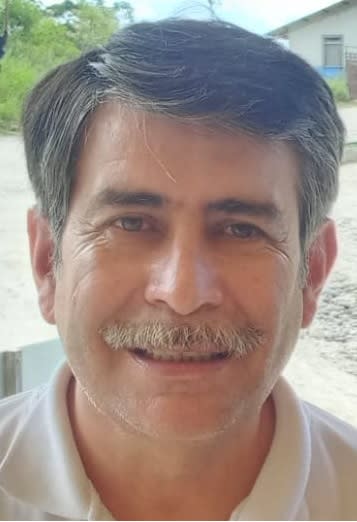
Anton Linstrom
Melissa Lintnaar-Strauss
Romina Llanos

Tatiana Lobato de Magalhães
Research Professor | Chapter Chair at the Society of Wetland Scientists | PhD, PWS
My research interests focus on the ecology, landscape genetics, restoration, and conservation of freshwater ecosystems. I have been working on large-scale spatial patterns of aquatic plants, combining community, population, and landscape approaches.
I serve as Associated Editor of the journals WETLANDS and Aquatic Botany.
Marti Louther
Marti is a wetland biologist, with over 25 years of experience. She works in the transportation field in western Washington and is part of the Pacific Northwest Chapter.
Monica Sofia Maldonado Fonken
Suheil Malek Hoosen
Daniela Marin Henao
Sebastian Matiz Cely
Musa Mlambo
Pablo Moncada
Florencia Mariel Monti Areco

Victoria Montilla


Nkosingizwile Ndlovu
Sharon Ndze
Louis Nkembi
Charles Olaya-Nieto
Mi nombre es Charles W. Olaya-Nieto. Nacido en Santa Marta, Colombia, en donde estudié y me gradué como Ingeniero pesquero en la Universidad del Magdalena en 1986. Luego realicé estudios de Maestría en Ciencias en la Universidad de Puerto Rico, Recinto de Mayagüez en donde me gradué en el año 2001. Con experiencia docente de 30 años, desde 1997 estoy adscrito al Departamento de Ciencias Acuícolas, Facultad de Medicina Veterinaria y Zootecnia de la Universidad de Córdoba, en donde soy profesor Titular.
Melisa Olivelli
Johnson Olusola
Mariana Ospina
Juan Sebastian Ospino
Valentina Pardo
Mateo Parra Cuadros
Jenny Marcela Peñuela López
Cristian Pérez Agudeló
Maria Pimiento
Kimberli Ponzio
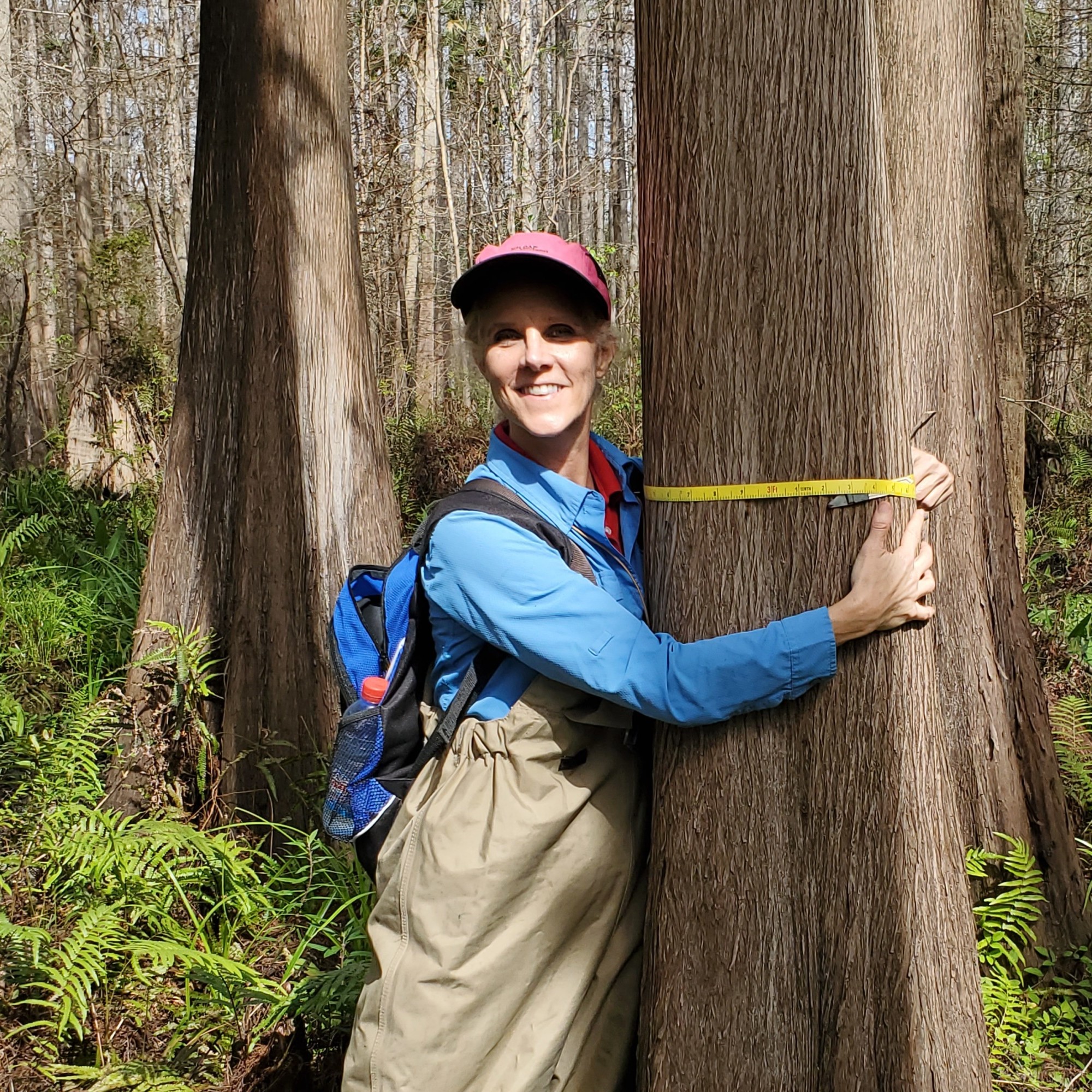 Kimberli Ponzio has over 36 years of experience working in Florida wetlands as an Environmental Scientist for two water management districts in the state of Florida, USA. Kim has been certified as a Professional Wetland Scientist for 25+ years, finding it important to ensure stakeholders from public, academic, and consultancy sectors that she has the education, work history, and skill-set necessary to deliver professional wetland services, and that she is committed to upholding a high standard of ethical behavior. Kim has been involved in leadership with the Society of Wetland Scientists since 2007, was SWS President in 2015, President of the SWS Professional Certification Program (SWSPCP) in 2020, and currently serves as Co-Chair of the SWSPCP Diversity, Equity, and Inclusion Committee. Kim is actively involved in helping to globalize the SWSPCP by making the Program accessible to qualified individuals, regardless of geography or financial standing. Kim’s approach has always been one of a collaborative spirit, which she believes is one of the most powerful mechanisms to further the cause of conserving, restoring, and protecting wetlands.

Kevin Poveda
Diana Quevedo
Mario Alberto Quijano
Jhonatan Mauricio Quiñones Montiel
Rubén Quintana
Kurnia Rachmawati
Anu Rai
Manuel Ralda
Michelle Ramer


Alanna Jane Rebelo Ph.D.
Maria Paula Rey Baquero
Josue Reyes Amaya
Johana Reyes
Charlene Russell
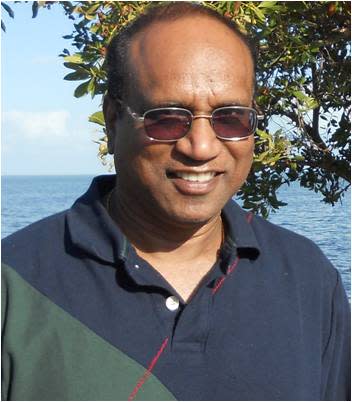
Jay Sah
Dr. Sah is a Research Professor, and his research focuses on ecosystem processes and their management implications in the seasonal wetlands in Everglades, coastal wetlands of the Southeast Saline Everglades, and the tropical and sub-tropical upland forests of the Miami Rock Ridge and adjacent islands in South Florida.
Dr. Sah’s expertise is in studying vegetation-environment relationships and effects of natural and anthropogenic disturbances on pattern and processes in various types of plant communities, including upland forests and floodplains, wet prairies, marshes and other seasonal wetlands.
His research approach includes the use of both univariate and multivariate statistical tools to analyze and interpret relationships among vegetation and environmental variables in large data sets, spatial integration of the analytical results via extensive GIS databases, and system dynamics modeling. He is also involved in inter-disciplinary research on socio-economic issues, conservation, and natural resource management in Nepal.
Hajera Sana
Omar Santiago Ph.D.
Yolandi Schoeman
Joseph Schubauer-Berigan Ph.D.

Ts'epo Sekaleli
Tshiamo Mcdonald Setsipane
Zati Sharip
Dr. Zati Sharip is a senior researcher at the National Water Research Institute of Malaysia (NAHRIM) and serves as the Unit Head of Lake and Reservoir Research at the Water Quality and Environment Research Centre since 2007. She is also an associate to the Academy of Science Malaysia. She obtained her PhD from the University of Western Australia, Australia focusing on physical-chemical-biological interactions in a tropical lake. She has conducted various researches on more than 40 lakes and wetlands in Malaysia for more than 16 years. Her research deals with hydro-ecological and hydro-biological studies in freshwater ecosystems.

Ashikur Rahman Shome
Ashikur Rahman Shome is an aspiring wildlife ecologist, working in the field of wildlife research and biodiversity conservation in Bangladesh. He is currently working in wetland wildlife conservation, urban wildlife conservation, and conservation of wildlife in the Ganges floodplain of Bangladesh. As a wildlife ecologist, he works in the Center for Environmental and Geographic Information Services (CEGIS) Bangladesh.

Milena Soula
Stephen Ssemwaka
Ivan Andres Tarquino Calderon
Andrea Tipe Garcia
Rodrigo Toledo
Camilo Torres

Carlos Troche Souza
Jana Uys
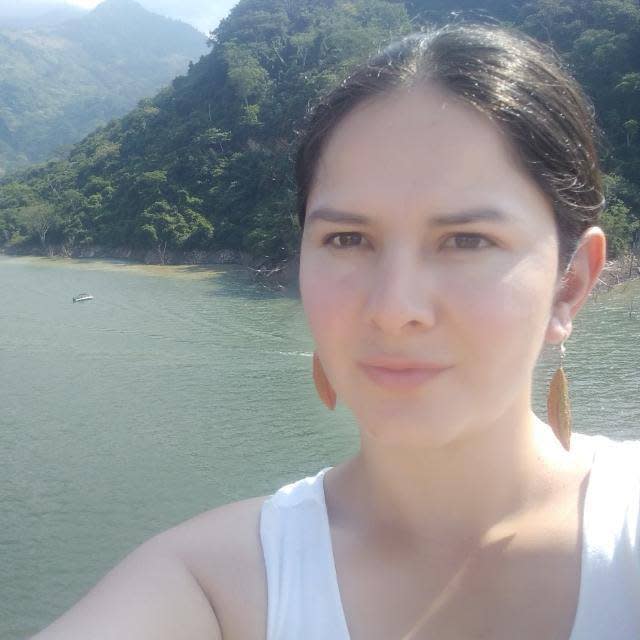
Jenny Patricia Veloza Torres
Geographer with a master's degree in regional and urban planning. I'm currently pursuing a PhD in Geography at the Institute of Geography and Spatial Planning of the University of Lisbon. My research has focused on the analysis of socio-environmental conflicts, political ecology, environmental planning and social movements. In particular, I've emphasized the study of environmental management and governance of water resources and wetlands.

Silvia Lucia Villabona
Gabriel Wanyoike
Fasil Wolebu
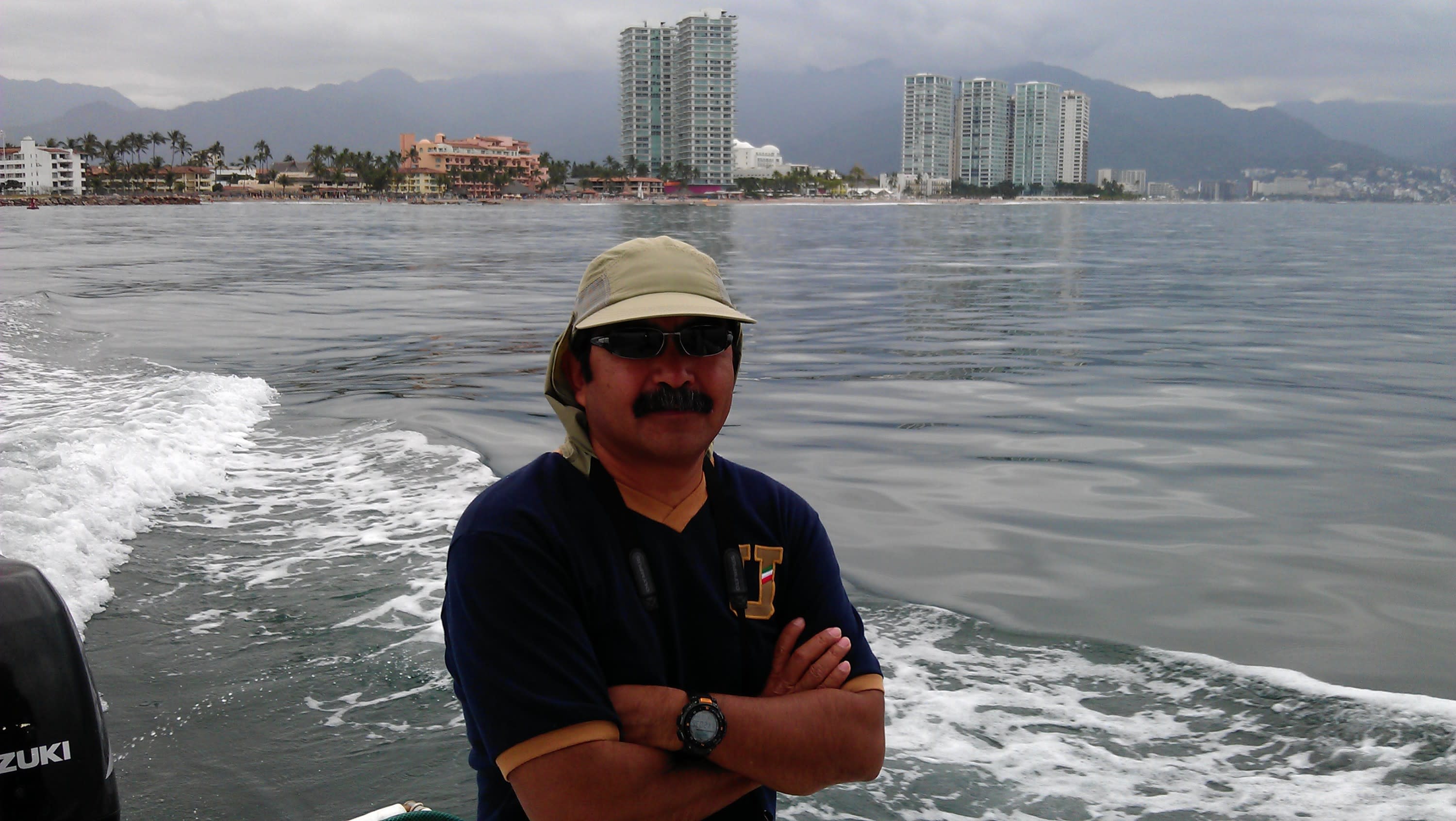
Ricardo Wong
Emmanuel Yeboah Okyere