Rocky Mountain Chapter

Heidi Bellorado
Karen Caddis
Karen Caddis is the principal, senior biologist, and wetland scientist at Caddis Environmental Consulting, LLC, a woman-owned small business. Over her 30-year career, Karen has been extensively involved in the coordination and/or management of multi-disciplinarian environmental and biological teams throughout the western U.S. and Alaska involving local and state governments, BLM, DOD, USFS, USACE, NRCS, CEC, OSM, FERC, and BIA. These have included biological studies and permitting for developments, utilities, transportation, oil and gas pipelines, hard and soft rock mining, reservoirs, ski areas, and renewable energy.
Karen specializes in coordination and completion of biological, wetlands, and environmental studies and documents in relation to regulatory permitting. She is also well-versed in preparing, evaluating, and conducting biological, and wetland delineation analyses to ensure compliance with applicable laws. She has managed and coordinated many biological field studies, associated NEPA permitting and reporting, and Section 404 and 401 coordination, including biological and wetlands studies for a 750 MW solar thermal electric development across 6,000+ acres in the Imperial Valley near El Centro, California; and over 50 large field efforts associated with military bases, airport development, mining, renewable energy, power plants, and other utility projects in California, Colorado, New Mexico, Wyoming, Utah, Arizona, Washington, Montana, and Nevada.
Karen has bachelor’s degrees in Natural Resource Management, Physical Geography, and Journalism from Colorado State University and Eastern Washington University. She is current in both surface and underground MSHA training, is a USACE-certified wetlands delineator and CDOT FACWet-trained and is permitted by the USFWS to conduct Ute-ladies’ tresses orchid, black-footed ferret, Mexican spotted owl, and Chiricahua leopard frog surveys. She is also experienced in desert tortoise, raptor, migratory bird, rare plant, invertebrate, general vegetation, yellow-billed cuckoo, and southwestern willow flycatcher studies.
Kent Crofts
L. Dean Culwell
Gillian Davies
Gillian Davies is a Senior Ecologist & Natural Climate Solutions Specialist at BSC Group, Inc., where her work focuses on climate change and wetlands, working with local communities to develop Nature-based Solutions, particularly wetland, forest, and soil conservation and restoration, and providing wetland peer reviews for Conservation Commissions. She is a Visiting Scholar at Tufts University Global Development and Environment Institute, is Immediate Past President of the Society of Wetland Scientists Professional Certification Program, was the 2016-2017 SWS President, is a co-lead for the SWS Climate Change and Wetlands Initiative and chairs the SWS Rights of Wetlands Section and the WOTUS ad hoc sub-committee. She serves on the International Association for Ecology (INTECOL) Wetlands Working Group. Gillian served on the Massachusetts Healthy Soils Action Plan working group. Gillian has a Master of Environmental Studies degree with a concentration in ecosystem ecology from the Yale School of the Environment, and a bachelor’s degree from Williams College. She is a certified Professional Wetland Scientist, a Registered Soil Scientist, and has received the SWS President’s Service and SWS 40th Anniversary Awards. In her spare time, she and her husband enjoy hiking, mountain biking and skiing.
Tim DeMasters
Jonathan Hammons
Ryan is an ecologist with a specialization in environmental consulting, restoration, wetlands, and planning/permitting.
Gwen Kittel
Vegetation ecologist specializing in wetland and riparian ecology, assessment, classification, and restoration.
William Kleindl Ph.D.
I have more than 28 years of academic and consulting experience within public and private sectors in the science, policy, and management of aquatic environments, including extensive experience in the assessment, restoration, and management of degraded wetlands and rivers across multiple scales. The goal of my career has always been to provide straightforward analysis of ecological data to facilitate a translation for management applications to solve tangible problems that intersect natural and human environments. At Montana State University, I focus my research on assessment and management questions that address combined anthropogenic and natural disturbances and how these drive aquatic structure, function, and services.
Joanna Lemly

Maryann McGraw
Curriculum Vitae
Maryann McGraw
New Mexico Environment Department Surface Water Quality Bureau
1190 St. Francis Drive Santa Fe, New Mexico 87502
Education
M.A. Geology, University of Texas, Austin Texas, December 1983.
B.A. with Honors Geological Sciences, University of Texas, Austin Texas, May 1974.
Positions Held
2003- Wetlands Program Coordinator, Wetlands Team Leader, Water Resources Manager I, New Mexico Environment Department, Surface Water Quality Bureau, Santa Fe, New Mexico
1999-03 | Watershed Protection Section Project Officer, Environmental Scientist- Specialist Operational, New Mexico Environment Department, Surface Water Quality Bureau, Santa Fe, New Mexico |
1998-99 | Research Scientist, US Dept. of Agriculture, Natural Resources Conservation Service, Los Lunas Plant Materials Center, Los Lunas, NM |
1997-99 | Part-Time Faculty, Santa Fe Community College, Santa Fe, NM. |
1993-98 | Highway Environmental Scientist I, NM State Highway and Transportation Dept., Santa Fe, NM |
1985-87 | Environmental Consultant, Steward Observatory, University of Arizona, Tucson, Arizona |
1984-84 | Field Geologist, Noranda Exploration S.W. District, Tucson Arizona |
1981-82 | Geological Consultant, Tenneco, Inc., Tucson, Arizona |
1979-79 | Geologist, Superior Oil Company, Minerals Division, Tucson, Arizona. |
1976-79 | Research Assistant, Bureau of Economic Geology, University of Texas, Austin, Texas |
1975-76 | Research Assistant, Department of Geology, Univ. Cape Town, Cape town, South Africa |
1974-75 | Research Assistant, Bureau of Economic Geology, University of Texas, Austin, Texas |
Current Bio: Maryann McGraw is the Wetlands Program Coordinator and the Wetlands Team Leader with the New Mexico Environment Department (NMED) Surface Water Quality Bureau. Maryann has managed projects funded by CWA Section 319(h) since 1998. Maryann currently manages projects funded by CWA Section 104(b)(3) and the New Mexico Wetlands Program since 2003. The heart of the Wetlands Program thus far, has been the development of Wetlands Action Plans by watershed groups as part of their Watershed Based Plans. In 2006, the Wetlands Program began developing the NM Rapid Assessment Method (NMRAM) to
characterize wetlands resources in New Mexico and has completed Montane Riverine Wetlands Version 2.4, Lowland Riverine Wetlands Version 2.3, and Confined Valley Rivirine Wetlands Version 1.3, Springs Ecosystems NMRAM Version 1.0, NMRAM for Playa Wetlands of the Southern High Plains Version 1.2, and NMRAM for Riverine Wetlands Regulatory Version 1.4. In 2009, the Wetlands Program began a comprehensive effort to map, classify and assign wetland functions to all wetlands in the state, and has thus far mapped and classified wetlands nearly all wetlands in New Mexico except for those on tribal lands. The goals of the New Mexico Wetlands Program are to implement our wetlands monitoring and assessment strategy, develop wetlands water quality standards and a comprehensive program to protect and restore the State’s scarce wetlands resources. Currently, the Wetlands Program has drafted standards for playa wetlands and lowland riverine wetlands. The goals of the New Mexico Wetlands Program are articulated in the New Mexico Wetlands Program Plan that was approved by EPA in 2011 and updated and approved by EPA in 2013, 2015, 2017, 2019 and in 2021.
Maryann was a past Board Member of the Association of State Wetland Managers providing to the board the perspective and challenges of a growing wetlands program in the arid West. She has served on the Steering Committee to develop a Strategic Plan for the EPA National Wetlands Program. Maryann is also a member of the National Wetlands Monitoring and Assessment Workgroup and the Society of Wetland Scientists. Maryann has presented on wetlands topics at the ASWM State/Tribal/ Federal Coordination Workshops 2009, 2010 and 2011, and 2013 and at EPA Region 8 Wetlands Program Capacity Building Workshop in 2010, and at the National Wetlands Monitoring and Assessment Work Group Meeting in 2008 and on several ASWM webinars, in 2016 for ACWA on the development of narrative standards for wetlands, at SWS Meetings in Denver where Maryann presented NMRAM for Playa Wetlands, NMRAM for Lowland Riverine wetlands (Gila Watershed) and SWS Rocky Mountain Chapter about NMRAM for Confined Valley Riverine wetlands. Maryann has been a member of the National Wetlands Condition Assessment Team for New Mexico collecting soils and other data in 2011, 2016 and 2021 and has managed funds and reporting for the NWCA.
Previously, Maryann worked for the New Mexico Department of Transportation (DOT) as an Environmental Specialist since 1993 where she provided input for natural resources protection as a part of transportation project design, wrote NEPA documents and was in charge of developing mitigation plans and projects for wetland impacts.
She has previously taught landscape ecology and restoration classes at Santa Fe Community College including Wetlands, Riparian Restoration, Dryland Restoration, Bioremediation, and Natural History of Arid Lands.
Maryann paints en plein air in pastel and oil, concentrating on New Mexico’s scenic vistas and how time and seasonal changes affect those places. Maryann served on the board of the Pastel Society of New Mexico as Program Chair for 5 years and Treasurer in 2007, is a signature member of Chicago Pastel Painters, Pastel Society of New Mexico and Plein Air Painters of New Mexico and is a member of Plein Air Artists Colorado, Pastel Society of Colorado and American Impressionist Society.
Maryann has provided Friday food deliveries for homebound clients for Kitchen Angels since 1996.
Fellowships
Shell Companies Foundation Fellowship 1979
Current Professional Membership
Member - National Association of Wetland Managers (NAWM) Member – Society of Wetland Scientists, Rocky Mountain Chapter
Certifications
Certified COE Wetland Delineator Training Certified Floodplain Manager
Additional relevant classes and training
3 Rosgen River Restoration Classes Southwestern Willow Flycatcher Protocol Training Spring Inventory and Assessment Training
Summary of Related Experience
Experience in land restoration includes the planning, design, and construction of wetlands and riparian areas, selection of sites and monitoring. I developed designs for mitigation wetlands, chosen appropriate plant species, provided cost estimates for excavation, disposal of excavated material and plantings. My work at the NRCS Los Lunas Plant Materials Center included propagation, maintenance and installation of wetland plant species. I helped develop plans for the restoration of habitat for the Southwestern Willow Flycatcher and Meadow Jumping Mouse, and the protection of listed plant species and their habitat in highway right of way. I have trapped and relocated prairie dog colonies and coordinated the protection of bird and bat species. I have worked with engineers to develop box culvert structures with fish passage, and to reconstruct streambeds to their original configuration after construction.
I have experience working with the majority of regulatory and resource agencies in the state for environmental compliance. I have written Environmental Assessments and other NEPA related documents. I currently lead the New Mexico Wetlands Roundtables for agencies and NGOs with an interest in wetlands.
Recent Awards:
2018 National Wetlands Award for Wetlands Program Management – Environmental Law Institute
2018 New Mexico Environment Department Employee of the Year 2018 New Mexico Environment Department Employee of the Quarter 2010 Research Award – New Mexico Riparian Council
2010 Radical Center Award for Civil Service – The Quivira Coalition
Recent Publications:
McGraw, M. and Johnson B., 2023. East Fork of the Jemez Watershed Wetlands Action Plan. New Mexico Environment Department, Surface Water Quality Bureau, Santa Fe, New Mexico.
Muldavin, E.H., E.R. Milford, and M.M. McGraw 2021. New Mexico Rapid Assessment Method: Confined Valley Riverine Wetlands Field Guide. Version 1.13. New Mexico Environment Department, Surface Water Quality Bureau, Santa Fe, New Mexico.
McGraw, M.M., E.H. Muldavin, and E.R. Milford, 2018. Rapid Assessment of Arid Land Lowland Riverine Wetland Ecosystems: A New Mexico Case Study. In Wetland and Stream Rapid Assessments, Development, Validation, and Application, (eds) J. Dorney, R. Savage,
R.W. Tiner, and P. Adamus, Elsevier, Inc. 2018, pp. 387-400.
Muldavin, E.H., E.R. Milford, and M.M. McGraw 2017. New Mexico Rapid Assessment Method: Playa Wetlands Field Guide. Version 1.2. New Mexico Environment Department, Surface Water Quality Bureau, Santa Fe, New Mexico.
Muldavin, E.H., E.R. Milford, and M.M. McGraw 2016. New Mexico Rapid Assessment Method: Montane Riverine Field Guide. Version 2.1. New Mexico Environment Department, Surface Water Quality Bureau, Santa Fe, New Mexico.
Muldavin, E.H., E.R. Milford, and M.M. McGraw 2016. New Mexico Rapid Assessment Method: Lowland Riverine Wetlands Field Guide. Version 1.1. New Mexico Environment Department, Surface Water Quality Bureau, Santa Fe, New Mexico.
Muldavin, E.H., Bader, B.J., Milford, E.R., McGraw, M.M., Lightfoot, D., Nicholson, B.,
and Larson, G. 2013, New Mexico Rapid Assessment Method: Montane Riverine Wetlands Field Guide, Version 2.0, New Mexico Environment Department, Surface Water Quality Bureau, Santa Fe, New Mexico, 39 p. and appendices.
NMED, Surface Water Quality Bureau, Wetlands Program 2012, New Mexico Wetlands Technical Guide #1: Wetland Functions, New Mexico Environment Department, Surface Water Quality Bureau, Santa Fe, New Mexico, 36 p.
McGraw, M.M. and Jansens, J.W. eds. 2012, Exploring Springs and Wetlands and Their Relationship with Surface Flows, Geology, and Groundwater in the La Cienega Area, Santa Fe County, New Mexico. Wetlands Program Project Report, New Mexico Environment Department,
Surface Water Quality Bureau, 125 p.p. 3
Muldavin, E.H., Bader, B.J., Milford, E.R., McGraw, M.M., Lightfoot, D., Nicholson, B., and Larson, G. 2011, New Mexico Rapid Assessment Method: Montane Riverine Wetlands Manual, Version 1.1, New Mexico Environment Department, Surface Water Quality Bureau, Santa Fe, New Mexico, 90 p. and appendices.
Muldavin, E.H., Bader, B.J., Milford, E.R., McGraw, M.M., Lightfoot, D., Nicholson, B.,
and Larson, G. 2011, New Mexico Rapid Assessment Method: Montane Riverine Wetlands Field Guide, Version 1.1, New Mexico Environment Department, Surface Water Quality Bureau, Santa Fe, New Mexico, 39 pp. and appendices.
Morgan, D. and M. McGraw 2010, Healthy Streamside Wetlands, A Guide to Good Stewardship for Southwestern Bosque and Riparian Wetlands. New Mexico Environment Department, Surface Water Quality Bureau, Wetlands Program Booklet, 27 p.
Griffith , G.E. Omernik, J.M., McGraw, M.M., Jacobi, G.Z. Canavan, CM., Schrader, T.S., Mercer, D., Hill, R. and Moran, B.C. 2006 “Ecoregions of New Mexico” color poster with map: Reston, Virginia, U.S. Geological Survey (map scale 1:1,400,000)
Other publications:
McGraw, MM 1979, Depositional Environments and Their Relation to Porosity in Upper Smackover Formation (Jurassic), Paup Spur Field, Miller County, Arkansas: ABSTRACT, American Association of Petroleum Geologists, Bulletin, Vol 63.
McGraw, M.M. 1984, Carbonate Facies of the Upper Smackover Formation (Jurassic), Paup Spur-Mandeville Fields, Miller County, Arkansas, in The Jurassic of the Gulf Rim, Proceedings of the Third Annual Research Conference, Gulf Coast Section, Society of Economic Paleontologists and Mineralogists, pp. 255-273.
Gustavson, T.C, McGraw, M. M., Tandy, M., Parker, F., Wohlschlag, D. E., Meriwether, J. 1977, Potential environmental impacts arising from geopressured-geothermal energy development Texas--Louisiana Gulf Coast region, Gulf Coast Association of Geological Sciences Transactions Vol 44, 1977-11-16.
Gustavson, Thomas, M. M. McGraw, and Mills Tandy. United States Department of the Interior. Ecological Implications of Geopressured Geothermal Energy Development. March 1978.
White, W.H., McGraw, M.M. and T. Gustavson, 1978, Environmental Analysis of Geopressured- Geothermal Prospect Areas, Brazoria and Kenedy Counties, Texas, Publ. Bureau of Economic Geology, Austin Texas, Department of Energy, Geothermal Energy, 203 p.

Toney Ott
Toney Ott
Toney Ott has been with the Environmental Protection Agency Region 8 over 40 years ago. Toney began her career as an aquatic field biologist and has assessed and sampled waters across the west. Toney has worked developed a strong fish advisory program in Region 8, worked in the nonpoint source program, worked in the aquatic invasive species field and water/wetland monitoring and assessment. Toney began working with the Region 8 wetlands team about 20 years. She was an active member of the waters of the U.S. Workgroup and helped with the completion of the first guidance for jurisdiction and initial rulemaking. She led the Region 8 workgroup to ensure consistent implementation of jurisdictional determinations, trained EPA and other water staff personnel on the processes and field support work.
She has been involved in the CWA Section 401 and 404 program. She provides support to the NEPA program, reviewing and providing comments on water and wetlands issues. Under 404 she has reviewed a wide of range of projects, including pipelines, residential and industrial development, dam removal, hydroelectric facility redesign and relicensing, and supported the jurisdictional reviews. She also organized four regional wetland workshops that had participants from all levels of government and the private wetland world. Toney led the 401 program for 20 years and continues to support the program. Toney is the lead for tribal wetlands technical assistance and grant program management. For the past 6 years Toney has been supporting EPA rule making.
Toney is an interdisciplinary riparian, wetland, and river ecologist with a diverse background in wetland, stream, floodplain, and watershed research support, restoration, and planning. Because of this broad background, she is able to see projects in their larger context and always work to see both the forest and the trees (and the watershed and floodplain).
Toney has organized and managed a number of large national and regional workshops and conferences. She has been able to bring diverse groups together to present on emerging and standard aquatic biology assessment methodologies and monitoring. Accordingly, I can help organizations of all sizes synthesize, create, and communicate scientific information and meetings to meet their needs.
I got my start in the field, monitoring and auditing wastewater and drinking water facilities. The other aspect of my position involved sampling, monitoring and assessing riparian, stream, river, wetlands and wetland complex ecosystems to inform adaptive ecosystem management and restoration, natural resource policy development, and environmental planning efforts. I am currently involved in Clean Water Act rule making, implementation of rules and guidance development, education of tribal professionals, policy and planning of environmental programs. I am knowledgeable in the development of wetland programs including monitoring, developing restoration and criteria to protect aquatic resources.
I am an experienced project manager, grant manager, assisting in the development of work plans and budgets, and developing successful programs to protect aquatic resources. I have managed over 75 grants, working with our applicants to develop and manage strong, nonpoint source, water quality, fish consumption and wetland programs. I have been able to develop relationships with diverse groups of stakeholders, scientists, policymakers, and interagency teams. As an experienced scientist, I specialize in the technical aspects of aquatic programs, but also my leadership and policy experience allow me to place ecosystem science into the policy and stewardship contexts that matter to agencies, companies, and society. Some of these contexts include the National Environmental policy Act (both Environmental Assessments and Environmental Impact Statements) Endangered Species Act, the Clean Water Act (including section 404, 402 and 401 programs), and tribal trust responsibilities outreach.

Kimberli Ponzio
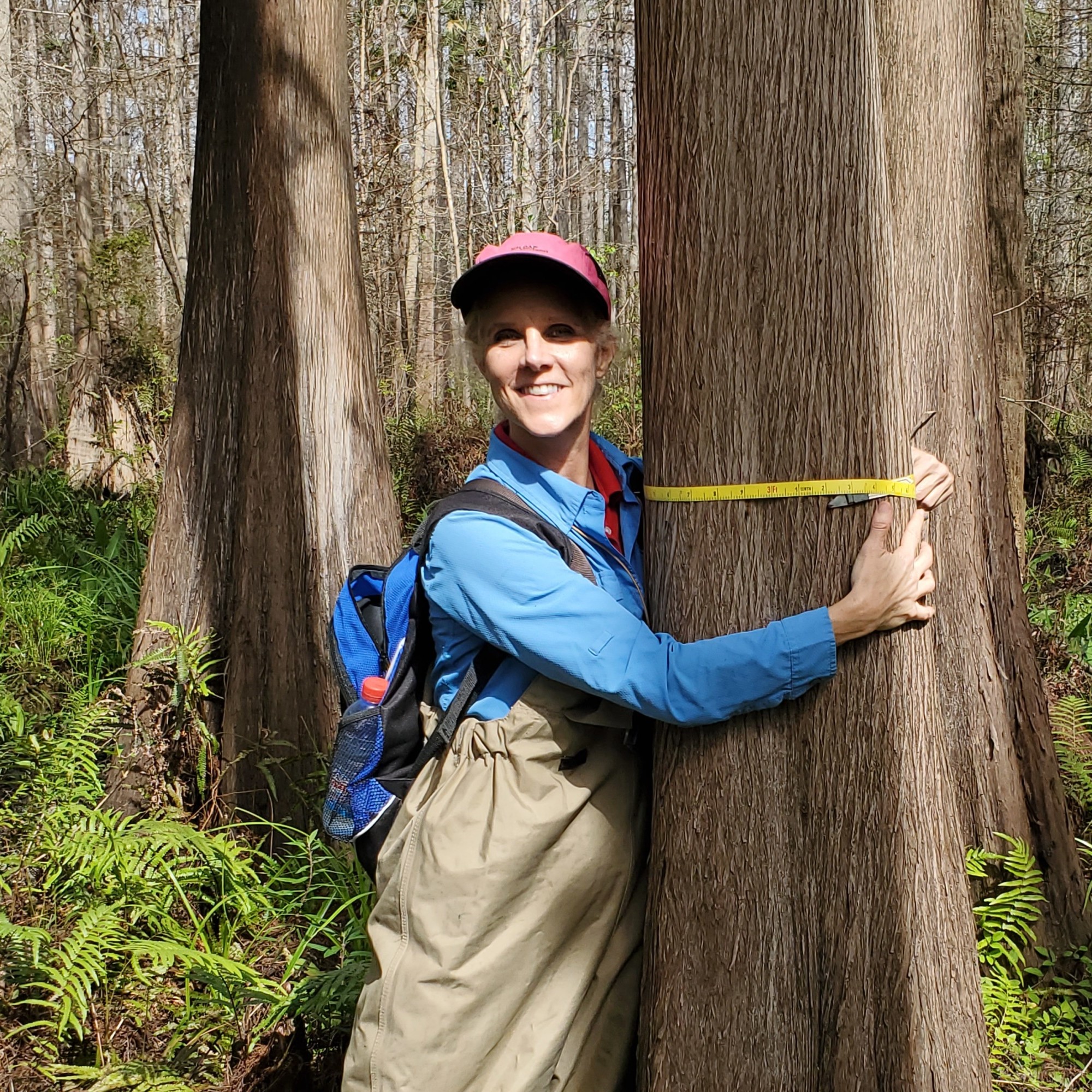 Kimberli Ponzio has over 36 years of experience working in Florida wetlands as an Environmental Scientist for two water management districts in the state of Florida, USA. Kim has been certified as a Professional Wetland Scientist for 25+ years, finding it important to ensure stakeholders from public, academic, and consultancy sectors that she has the education, work history, and skill-set necessary to deliver professional wetland services, and that she is committed to upholding a high standard of ethical behavior. Kim has been involved in leadership with the Society of Wetland Scientists since 2007, was SWS President in 2015, President of the SWS Professional Certification Program (SWSPCP) in 2020, and currently serves as Co-Chair of the SWSPCP Diversity, Equity, and Inclusion Committee. Kim is actively involved in helping to globalize the SWSPCP by making the Program accessible to qualified individuals, regardless of geography or financial standing. Kim’s approach has always been one of a collaborative spirit, which she believes is one of the most powerful mechanisms to further the cause of conserving, restoring, and protecting wetlands.

Christine Prah
Chris Prah is the co-founder and CEO of On Pointe Consulting, a woman-owned environmental consulting firm specializing in natural resource “boots on the ground” surveys, permitting, and project management for the energy industry nationwide.
She has over 17 years of experience working for private environmental consulting firms, local government, and non-profit organizations in a variety of regions (from the Rockies to the Gulf Coast to the Midwest).
Chris is passionate about truly acting as an ENVIRONMENTAL ADVISOR to On Pointe’s clients by helping them complete the projects that benefit people while also protecting the natural resources that benefit our world. She believes that the best way to secure clients and create strategic partnerships is by building relationships and trust through genuine connection and engagement. Good business starts with a good relationship!
You will find Chris nowadays traveling across the country in the On Pointe mobile RV office! This adventure allows her to travel, live, and work wherever project needs and business development opportunities arise.
Gallup Clifton Top Superpowers: Futuristic, Achiever, Responsibility, Strategic, Relator.

Joseph Schubauer-Berigan Ph.D.
Brian Stockowitz
A Professional Wetland Scientist, Brian has over seven years of experience in the natural resource management field and has completed projects from Alaska to Arkansas, and many places in-between. As an employee of DJ&A, Brian leads field surveys for a variety of resources specializing in aquatic resource delineations, rangeland and vegetation surveys, and soils inventories. He is also responsible for preparing soils and hydrologic specialist reports and significantly contributes to the writing of Environmental Assessments (EAs) and other documents associated with the National Environmental Policy Act (NEPA).

Joel Wagner
I earned my MS in Environmental Science at Indiana University's School of Public and Environmental Affairs in 1980. I began my 39 year career with the U.S. National Park Service at Everglades National Park in 1980, working on optimizing surface water flow to the park's wetlands. In 1988 I moved to Denver, Colorado where I served as the National Park Service’s Servicewide Wetlands Program Lead (NPS Water Resources Division) until I retired in March 2020. I am now an NPS Water Resources Division "Affiliate" (volunteer).
Blaine Watson
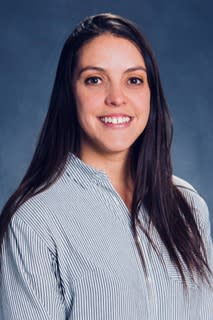
John Whittingham
Over fourty years experience in watershed science, hydrology, and soils. Certified Professional in Erosion and Sediment Control (CPESC 3445) since 2006, Professional Wetland Scientist (PWS 2155) since 2011, several Montana Department of Agriculture professional licenses, DBA BBS since 1999. Current emphasis in habitat restoration, land rehabilitation and reclamation. HAZWOPER, SWPPP, MSHA certified.
